Power Distribution Module
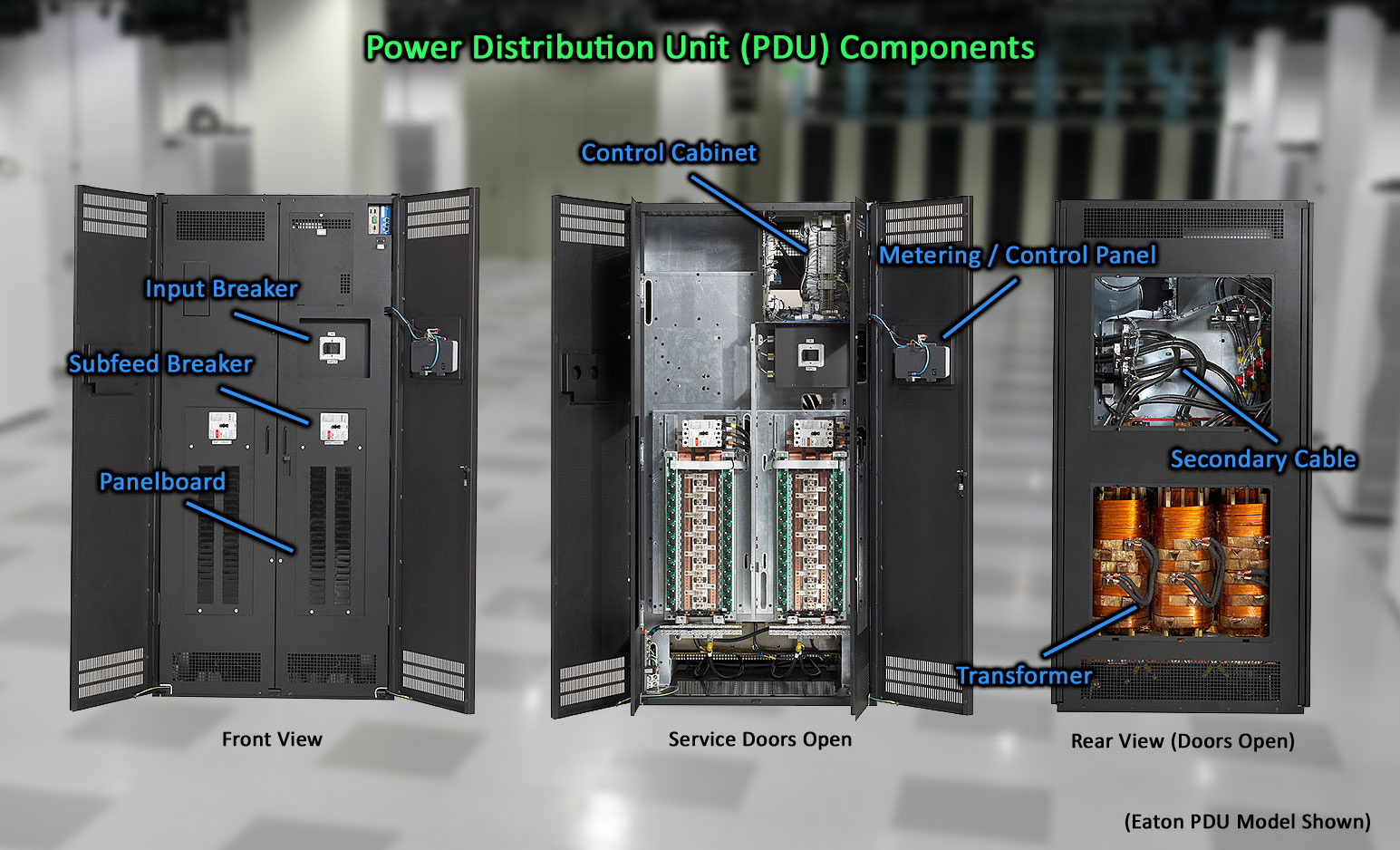
power distribution unit
The power distribution unit is the delivery of electrical power from a power source to IT equipments. To ensure availability and reliability, a power distribution system needs to be designed and supported so that it can deliver a power supply to all in-use IT equipment at all times. It does not generate or condition power, but delivers AC power from an uninterruptible power supply (UPS, a generator, or utility power source.
Power distribution is one of the most important considerations for a data center that is easy to take for granted. Generally, data center power distribution isn’t an issue until a moment of crisis – a power outage, extreme weather, or equipment failure, for example.
Understanding how a data center is powered, as well as what’s required to distribute the power, can help you make sense of the various configurations and equipment used to keep the lights on, and then some.
Intelligent Power Distribution System Solution
With the rapid development of communication industry and the continuous progress of communication technology, the computer room power environment integrated monitoring system of communication enterprises and other transportation, banking, securities, insurance, large industrial and mining, chain enterprises with three major operators as the main body has become an important part of enterprise communication operation and maintenance management. The power supply and distribution design of data center has become a hot issue. Efficient and reliable data center power distribution system scheme, It is an effective way to improve the power utilization efficiency of the data center and reduce the energy consumption of equipment.
The power supply and distribution monitoring system of the IT computer room is a highly safe, stable and reliable monitoring system for the data center computer room that meets the requirements of big data. The system carries out real-time communication interaction with various intelligent environmental equipment at the front end. Through intelligent monitoring, analysis, control, and diversified alarm processing mechanisms and friendly presentation, the operation and maintenance personnel of the data center can timely understand the operation status of power supply and distribution equipment in the data center, greatly reducing the burden on management personnel, and improving the operation efficiency of power distribution in the data center.
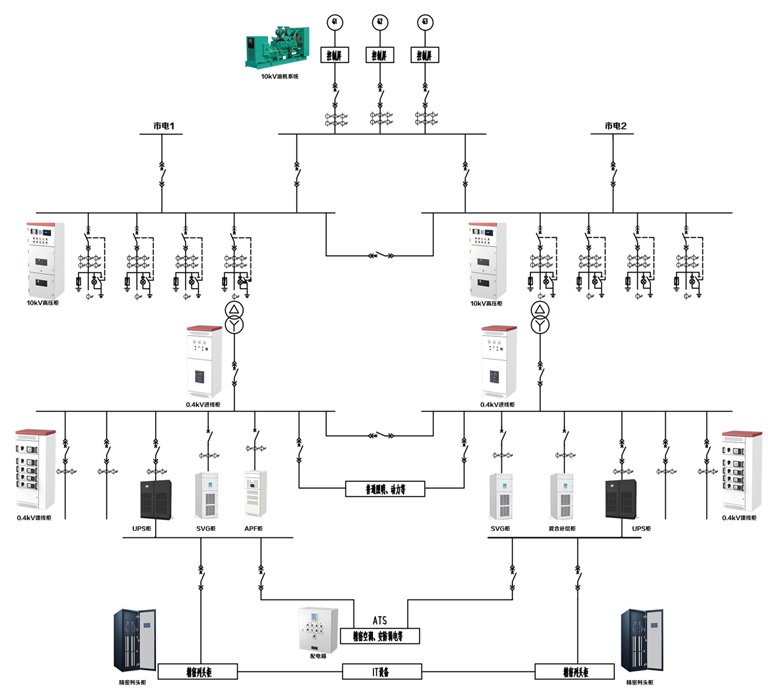
Power Distribution Unit
Power Distribution Unit
LV Cabinet
LV Cabinet
SPC Smart Module
SPC Smart Module
Line Feeder Module
Line Feeder Module
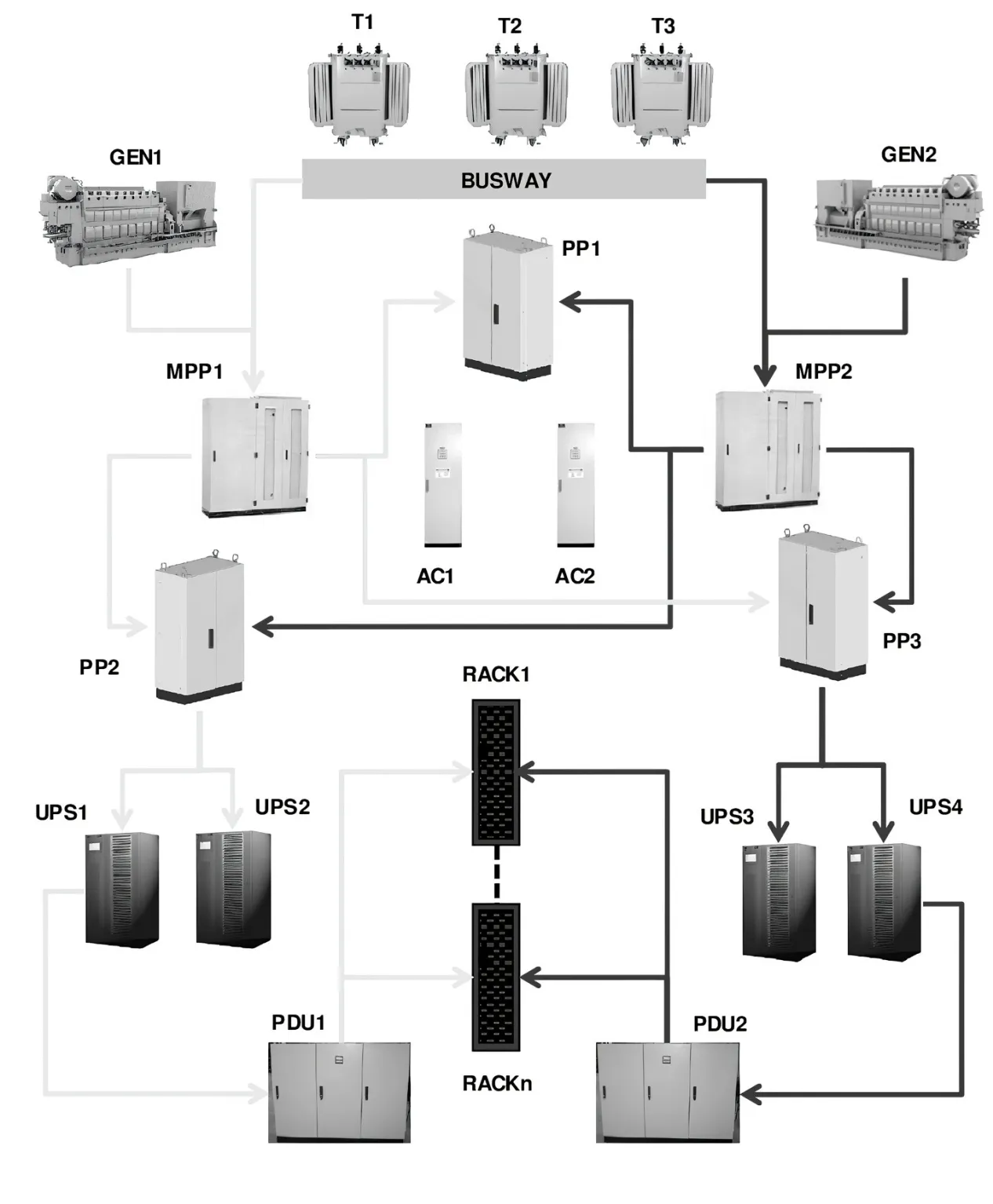
How is Power Distributed in Data Centers?
Power Source
The main power source for a data center normally comes from utility power from the grid. In cases of extreme weather or other disruptions, data centers may also use alternative data sources or generators.
Power is delivered to the data center from a utility company at a medium voltage level, such as 13.8 kV or 34.5 kV, but is then usually stepped down to a lower voltage level using transformers (480V or 208V).
Lower voltage power is then delivered to the data center via components via UPS, PDUs, and RPPs.
Uninterruptible Power Supply (UPS)
Power utility issues can be temporarily countered with an uninterruptible power supply (UPS). These devices offer battery backup to cover the time between the detection of utility issues and a generator starting.
Power Distribution Unit (PDU)
Individual IT equipment racks are served by power distribution units (PDUS) offering both metered and unmetered options. With metered PDUs, organizations can understand more about their power consumption, which enables them to begin taking steps toward optimizing their usage.
Remote Power Panel (RPP)
Remote power panels (RPPs) are the connectors between the PDUs and the individual IT devices. They can generally be found in the same rack as the IT equipment they are serving.