Air Cooling
What is Air Cooling system?
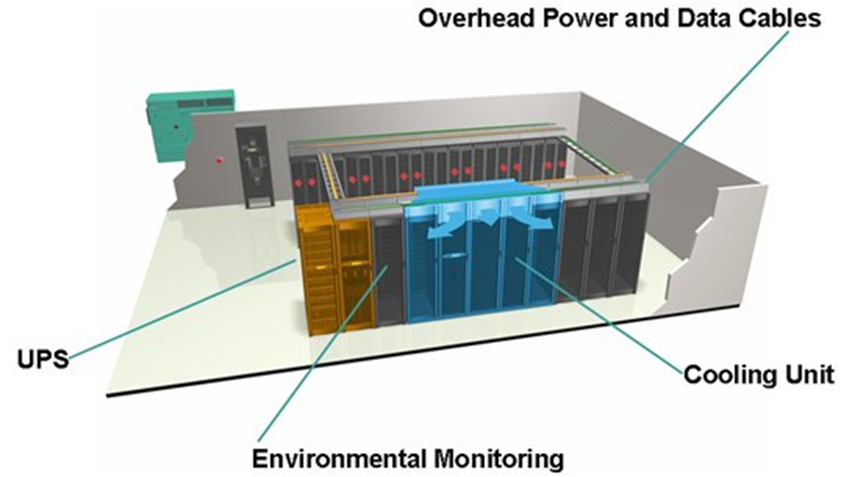
Air cooling is the most conventional method employed in data centers, despite the inherent inefficiency of air as a cooling medium. It involves circulating cool air through the server racks to dissipate heat. This method typically uses Computer Room Air Conditioners (CRAC) or Computer Room Air Handlers (CRAH). These units draw warm air from the data center, cool it down, and recirculate it. While air cooling is well-established and has lower initial setup costs.
An air-cooling setup primarily consists of two main components: fans and heat sinks. Fans are the primary source of airflow, which helps dissipate heat from the components. They are usually attached to the case, central processing unit (CPU) and graphics processing unit (GPU) and draw cool air in while expelling hot air out. Fans come in various sizes and configurations, including case fans, CPU fans, and GPU fans. Heat sinks, on the other hand, are designed to increase the surface area available for heat dissipation. They are typically made of metal, such as aluminum or copper, and are in direct contact with the component they are cooling. The heat sink absorbs heat from the component and then transfers it to the surrounding air. Some heat sinks may also include heat pipes, which help conduct heat more efficiently.
Advantages of Air Cooling System
High efficiency and energy saving
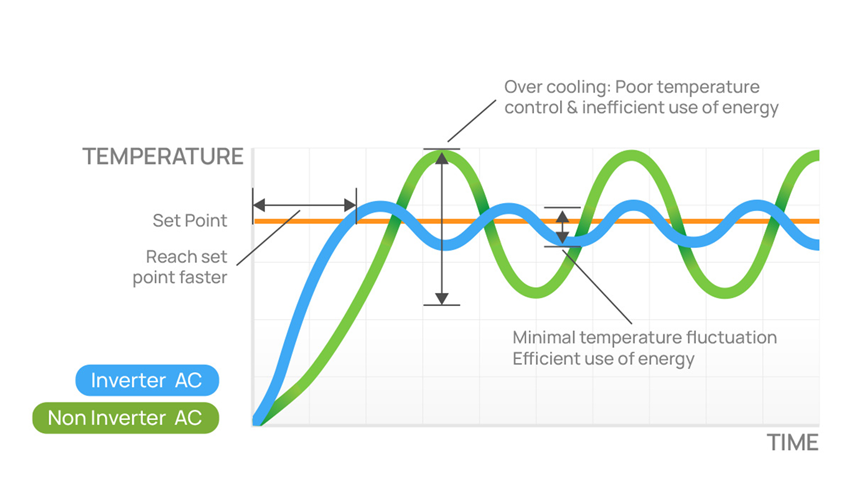
● High-efficiency DC inverter compressor, real-time adaptation to changes in heat load, maintains temperature within envelop and prevent compressor from cycling during low heat load period.
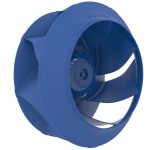
● High quality EC fan, lower noise, better airflow organization, accurate automatic control of airflow output.
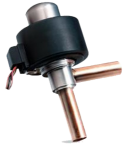
● Equipped with electronic expansion valve to quickly and precisely adjust the system refrigerant flow, saving 30% energy comparing with traditional expansion valve.
Safe and reliability
● Mainstream brands are used for key components, making operation more stable and reliable.
● Using R410A green refrigerant, in line with international green refrigerant requirements.
Intelligent Control System
- Advanced microprocessor controller, with insightful sensor data and intelligent control logics.
- All digital control to major components, maintaining optimum working status, and flexible adjustment per onsite working conditions.
- 1000+ alarm records, and 7days history pressure curve records, 7days history temperature curve records.
- Smart monitoring protocols: Web/SNMP/Modbus/Bac-net/Email/Dry contact/IPV6.
- Teamwork function including Master/Slave Working mode, Master Control mode and Force Working mode.
- Built in web server support visit with web-browser from computers and mobile devices, can view ,control unit through web.
Top-mounted Air Cooling
Integrated Top Cooling 2.5kW-3.5kW
all-in-one integrated top precision cooling are built upon a high-energy efficiency design concept in both product design without condensing box unit outside which is easy for installation. Built in the cooling unit, helps the condensate to evaporate into steam, which is discharged out of the machine through the fan of the condenser, preventing any dripping on the inside and outside of the unit.
Rack-mounted Air Cooling
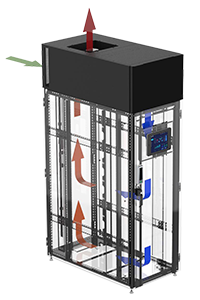
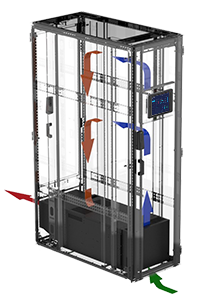
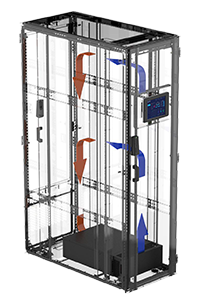
In-rack cooling provides the most precise means of delivering chilled air to IT equipment. The cooling unit is placed directly in the server cabinet provide direct airflow into the rack cabinet, using fans and ventilation grills to circulate cooled air, reducing heat in the devices, minimizing the amount of space that must be cooled.
Refrigerant-based rack cooling units may be mounted on bottom or horizontally within the cabinet, like IT equipment. Condenser unit can be installed together or a separate, adjacent enclosure, often in a rear-door panel. Hot exhaust air passes through the chilled water and into the room at ambient temperature.
Rack Cooling Solutions
We provide a range of advanced cooling solutions for data centers and server rooms with high operational efficiency and low energy cost. Our rack cabinet systems are equipped with integrated fans and ventilation grills to ensure effective airflow. For high-density data centers, we offer rack-mounted liquid cooling options.
Energy Efficiency and Cost Savings
Effective heat management in data centers is crucial for reducing energy consumption. An efficient cooling system not only extends the life of devices but also lowers energy expenses. Our rack-mounted cooling solutions are ideal for businesses aiming to boost energy efficiency and meet sustainability objectives.
Row-mounted Air Cooling
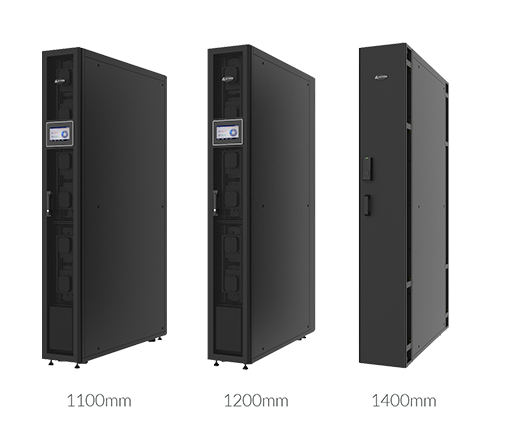
Row mounting and airflow front/side discharge design bring cooling closer to the heat source, with intelligent controls that dynamically regulate output for improved cooling efficiency. Multiple configuration with air-cooled, water-cooled, and chilled water types, high reliability with world leading brand components support -40C – 55C continuous working. Full range of models are available to meet the needs of today’s IT environments.
To optimize the value of in-row cooling, data center operators should match the cooling unit’s capacity to the IT equipment’s needs. High-density cabinets should be placed together in a row with redundant, high-capacity cooling units. Lower-density cabinets should be placed separately with an appropriately sized cooling unit.
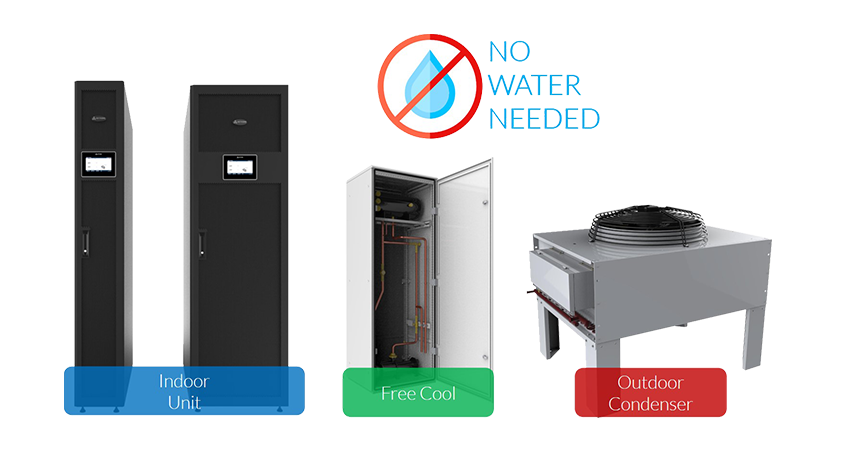
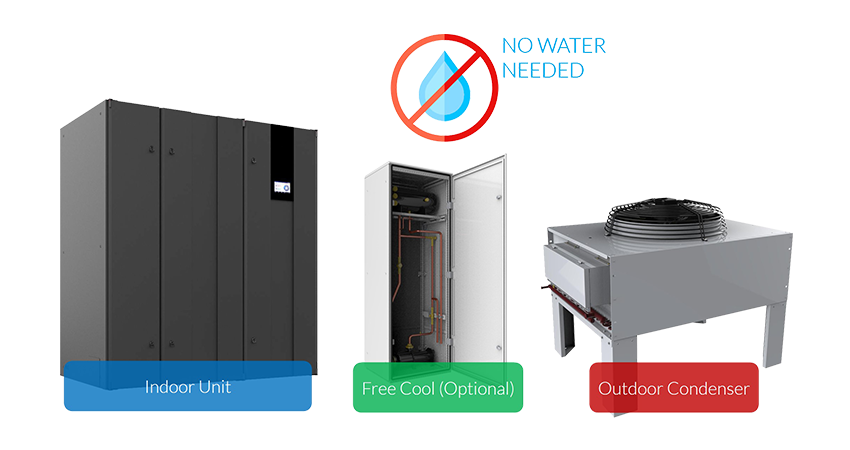
- Indirect free cooling with refrigerant pump technology, PUE low to 1.2.
- No water consumption during free cooling mode.
- No water loop introduced into server room, no flooding concern.
- Indirect type No dust, moisture concern.
- Automatic mode switching, and no complex maintenance and service.

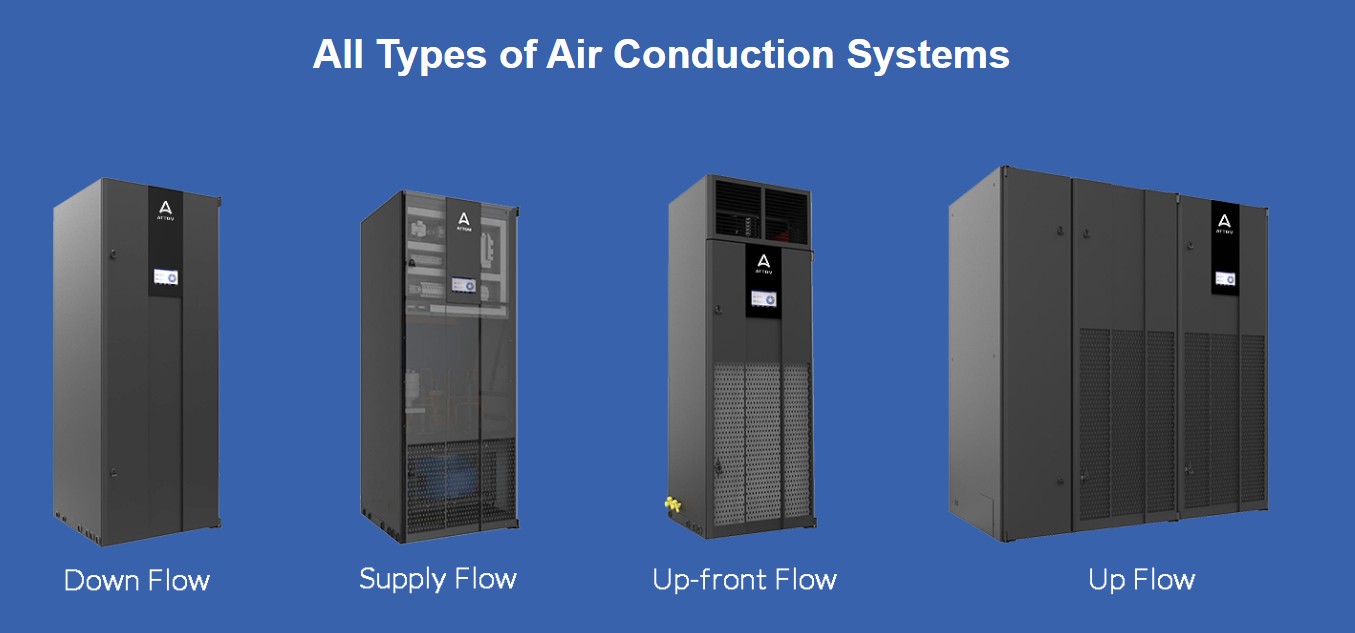
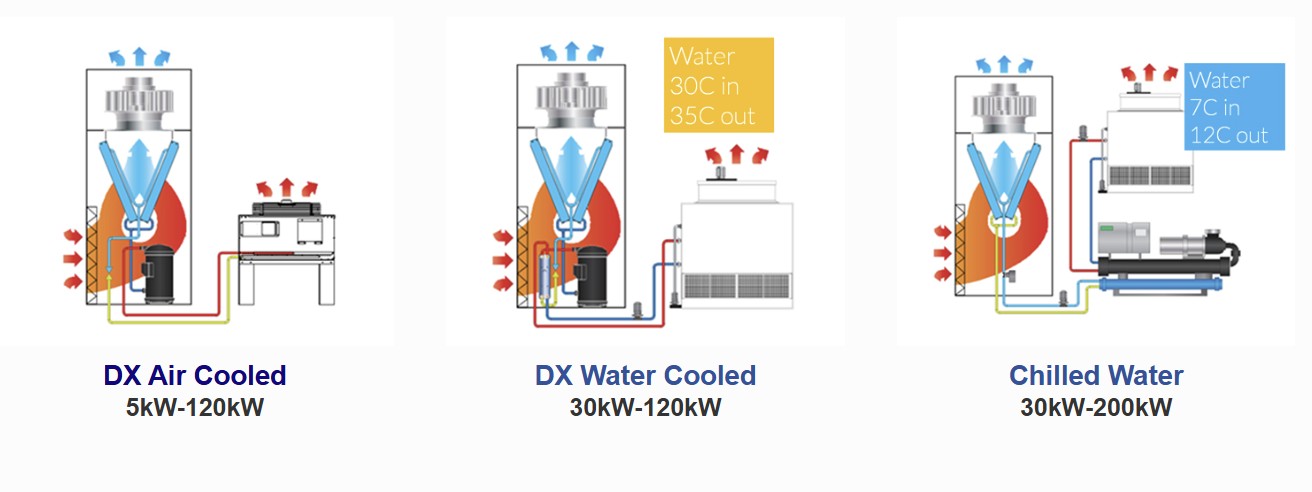
Room Air Cooling
CRACs (Computer Room Air Conditioners) are designed for use in data centers, data processing rooms, telecom centers and other applications where keeping the keeping thermo-hygrometric conditions constant year-round is important to ensuring the correct operation of electronic devices.
With high technologically advanced design, close control units control the ambient temperature with remarkably high precision and, when humidity requires, adapt their cooling capacity to meet the room’s requirements. This is all managed automatically by the on-board microprocessors. The high technology employed during their design, together with the use of the best components available, make these units extremely reliable when operating continuously.